
A Date with Dæmon
Meeting Your Soul In a Creative Container

If invoking ghosts, demons, spirits, gods, demigods, nymphs or hobgoblins helps us write, then we should banish the superstition about not being superstitious and invoke them without embarrassment or hesitation. ‘All deities reside in human breast.’
— Philip Pullman
Headwaters 8-week long writing course begins soon (April 2026)! We will work through creative blocks and dive into authentic writing. You can find all the information about the course here. 𖦹
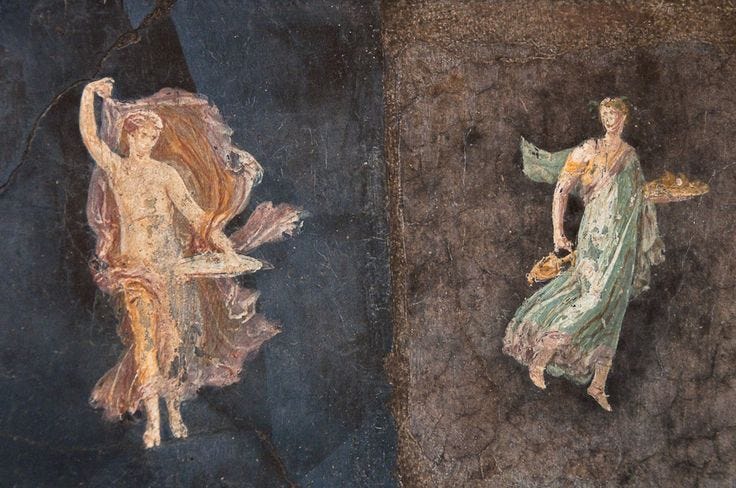
Daimon in Antiquity
Dæmon or daimon in our history goes back to the time of Socrates.
Daimon is the innermost guiding principle within you, the most concerned with truth and alignment with authenticity, and even perhaps your pre-birth intention.
For Socrates, his daimon was a guiding voice that would usually appear when he was about to make a wrong decision, protecting him from the consequences. Socrates interpreted his daimon’s silence as the absence of objection, and so the choice he was about to make was right for him. He recounted his daimon’s presence from early childhood.
Socrates’ daimonion (δαιμόνιον) was the earliest Western description of an inner psychic guide, describing the agency and activity of daimonic energies within humans. Primarily, providing guidance, inner instinct, intervention.
In Greek mythology, daimons were creatures occupying the realm between mortal humans and the gods. They were messengers and guides, not specific or named, but coercing the supernatural into the places of need. I like that these beings, or forces of the supernatural, were not specifically identified or named by the lore. It allows a deeper personal experience, and perhaps, a relationship of one’s own with a deity that resides so closely within one’s breast.
In pre-Christian times, daimons were allowed goodness as much as evil. They were agentic beings. Later on, daimons were divided into the guardian angels and demons we know today: ill-intended, life-consuming entities, with whom a person can enter into a contract or agreement of mutual benefit.
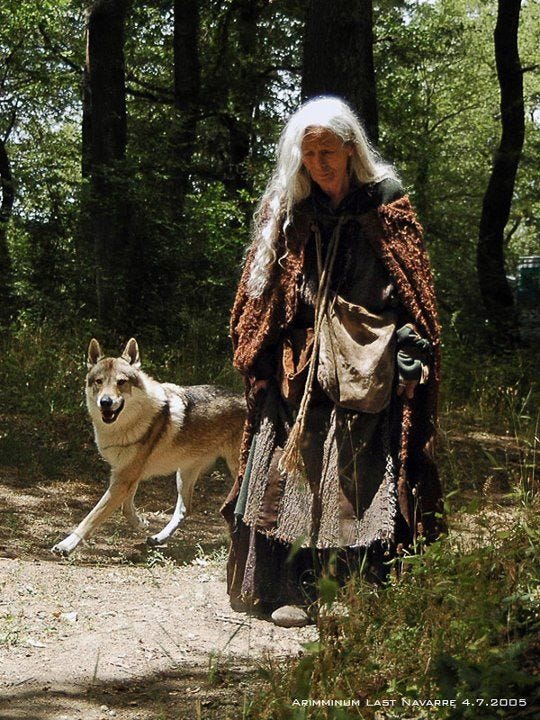
Witch and Her Familiar
Something that deeply reminds me of the concept of daimon is a witch’s familiars. These were the beings who assisted witches and cunning-folk (healers) in their healing practice, divination, spell making and casting, and so on. Familiars were spirits in animal form, creating a lateral bond with their human counterpart, albeit serving as protectors and amplifiers of their powers. They could have been dogs, cats, rabbits, toads, or birds. In Christian times, familiars were seen as demons, malevolent and presented by the devil, but that perception later on shifted, and familiars were associated with fairies.
In our animate human history, our ancestors held a tight relationship with more-than-human beings. This relationship extended into the exchange of bodies. Zoomorphic figurines from the Neolithic period point us towards a much more intimate bond between what we call human and what we call animal. From bird-women and fish-women, to minotaurs, to skin-shedding selkies, to shamans transfiguring into the wild ones with fur and claws, we walked the animal form as much as the animal walked the human.
Ever wonder why it was perfectly normal (event expectant) for animals and trees to speak in human tongues in our books, TV shows, and old tales? We are born with consciousness that expects animacy, because it’s our natural, primordial state.
As I was writing this part of the newsletter, my partner came into my room to let me know that a blue tit bird had crashed into our balcony’s window! We’ve put it safely into a carton box with towels, to recover in warmth. [Update: The bird has warmed up, and as I was lifting up the cover of the box, she immediately flew towards the window. I scooped her up and let her out. What a precious little thing. We have tried out various bird-from-window repellents, but if you have any tips that work, please leave them in the comments.]
I digress.
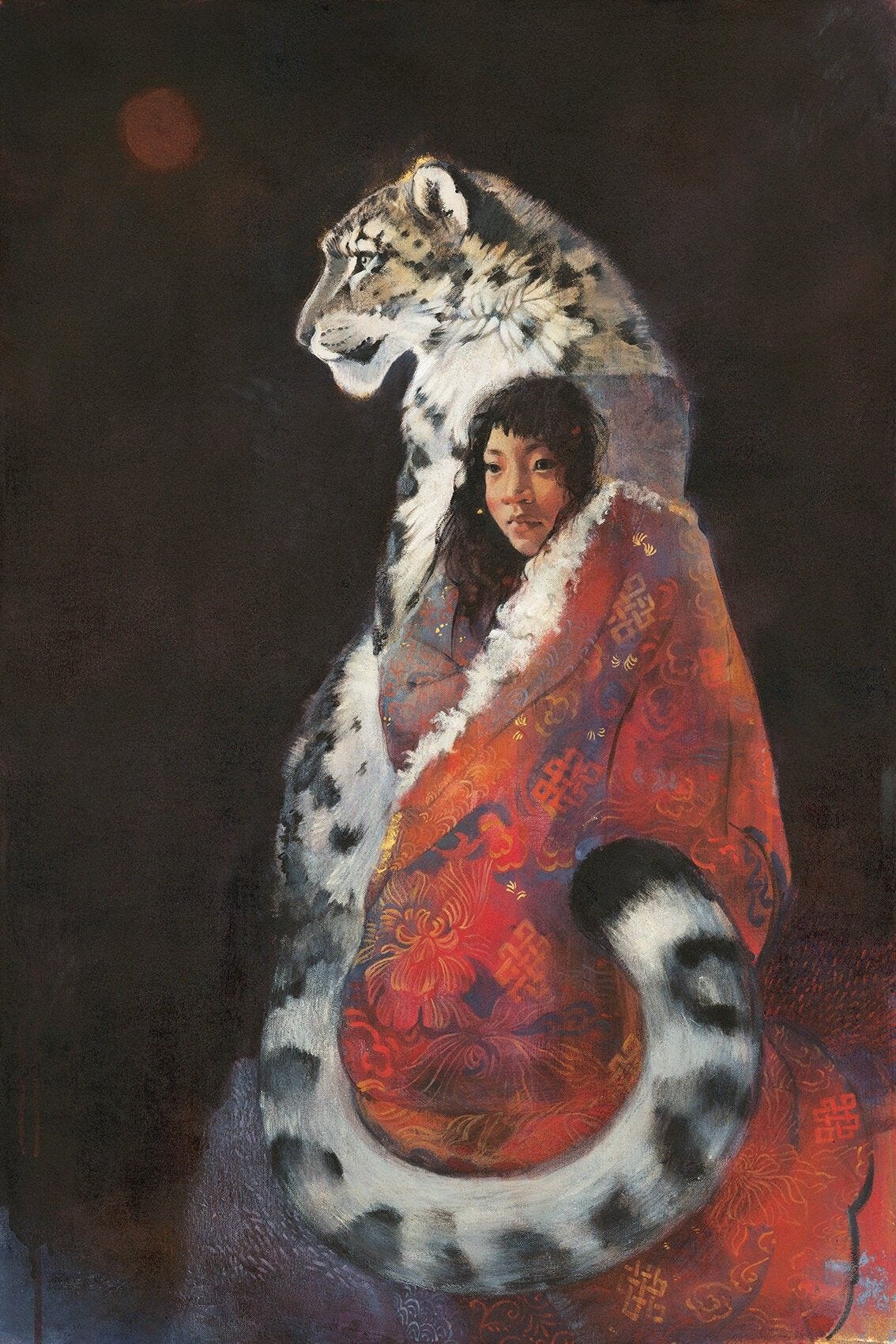
Pullman’s Daimon
After being entrenched in the world of William Blake, Philip Pullman crystallized axioms we can use while creating and writing. This is one of my favourites:
Axiom number five: we should use what works. And if invoking ghosts, demons, spirits, gods, demigods, nymphs or hobgoblins help us write, then we should banish the superstition about not being superstitious and invoke them without embarrassment or hesitation. ‘All deities reside in human breast.’
What a wonderful way to put it.
Philip Pullman took the idea of Socrates' daimon and transformed it further. Here (in His Dark Materials trilogy), the daimon lives in a non-human form, yet with a human voice, fully visible, and most importantly, individual to a person. The daimon can morph and shapeshift into various creatures (mostly animals) until the end of childhood and start of puberty, around 11-12 years old. After that, daimon takes its final shape and remains in that form until death.
I felt very intrigued when I learnt that in Pullman’s system, it physically hurts to stay far away from your daimon. Severing the human from their daimon would cause unbearable pain to both, and eventually death.
Was Pullman tugging at something much larger than a cute animal companion?
He certainly was.
Daimon, in Pullman’s eyes, was a personified version of soul, intuition, and conscience. The final shape of the daimon reflected who the person was at the core, their true interior character. It also reflected their true feelings, emotions, reactions, and thoughts, much more easily expressed through the animal form than the sometimes constricted human expression. An exchange between the two was always happening, a dynamic dialogue, a nonverbal cue of understanding.
But, what if we have lost our relationship with our daimon? What if the soul is asking us to make different decisions, what if it’s asking us to create, and we are deaf to its signals?
In writing practice, that translates into creating what we think might please the readers. Or freezing completely, and having no idea where to start or what to even write about. It’s a sense of being out of touch with those inner currents that are full of life, and creativity, and ideas, and discipline to materialize them.
Your daimon asks you to return home, to return to the spirit taking flight.
It makes complete sense that it hurts to be away from your soul. The further away we wander, the more suffering and pain we feel. Sometimes (most of times) this happens through traumatic events and ongoing traumatic experiences. It breaks, or at least chips away at the human bond with their innermost essence.
Through life experiences, we adapt to that pain of separation, we mask it in various addictions, numbing, dissociation, apathy.
How do we reconnect with the Daimon?
If your daimon is the portal to the ineffable, then we must find words to express the journey there.
If you were to have a daimon, what shape would it take? What would be its character, its desires, its way of moving?
The best way to reconnect with your daimon is to go on a date with it.
You must treat it as a relationship, and some courting need be involved.
As Martin Shaw says, to court your wild twin. That which was exiled through tribulations, that which was silenced, yet that which has the most to say about the truth of you.
So if we were to go on a date with daimon (the soul self), how would that look like?
For me, that is allowing myself to write whatever I actually want to write, releasing all the internalized pressure. To go down the research rabbit hole and connect ideas that don’t seem to be related on the surface. To have a walk by myself and converse with various voices in my head, knowing one of them will be the voice of my daimon.
Through creation, we are able to enter this conversation; through regular devotion that isn’t conditional or demanding.
Your creativity depends on attuning so well and so deeply to this daimon that the rest of the noise falls away, and all you are left with is clarity and creation.
Community of Practice — Date with your Daimon
If you’d like to develop a regular and ongoing relationship with this part of you and your writing:
I invite you to join the waitlist for my writers’ community. This is for those who want to write from the heart, the soul, in deep connection to the deities that reside in the human breast. This is for all of you who want to make it regular and prioritize your writing.
The community is in the process of being built, and here you can express your desires if you were to be a part of it.
Here you can join the waitlist to hear about it when it launches.
This was a brilliant read!!!
I loved reading this. I am so interested in these topics and finding a piece that delves into them so beautifully was a gift today! Thank you for sharing :)